Independent security guidance
A familiar email can change where the money goes
The supplier's name is right. The invoice is due. The message is in the same thread the accounts team has been using for weeks. Only the IBAN has changed. That small alteration is enough to turn a routine payment into invoice redirection fraud, and the email may have come from the supplier's real mailbox after a bad actor gained access. FraudSMART describes exactly this pattern.
Irish resident payment providers recorded €179.04 million in fraudulent payments in 2025, up 27.2% from €140.80 million in 2024. Of the 2025 value, €163.8 million, or 91.5%, was recorded as online payment fraud. Those are values of fraudulent payment transactions. The Central Bank separately reports €112.7 million in losses borne by users, providers and others, including €84 million borne by payment service users. Calling the €179 million a net loss to Irish victims would blur those different measures.
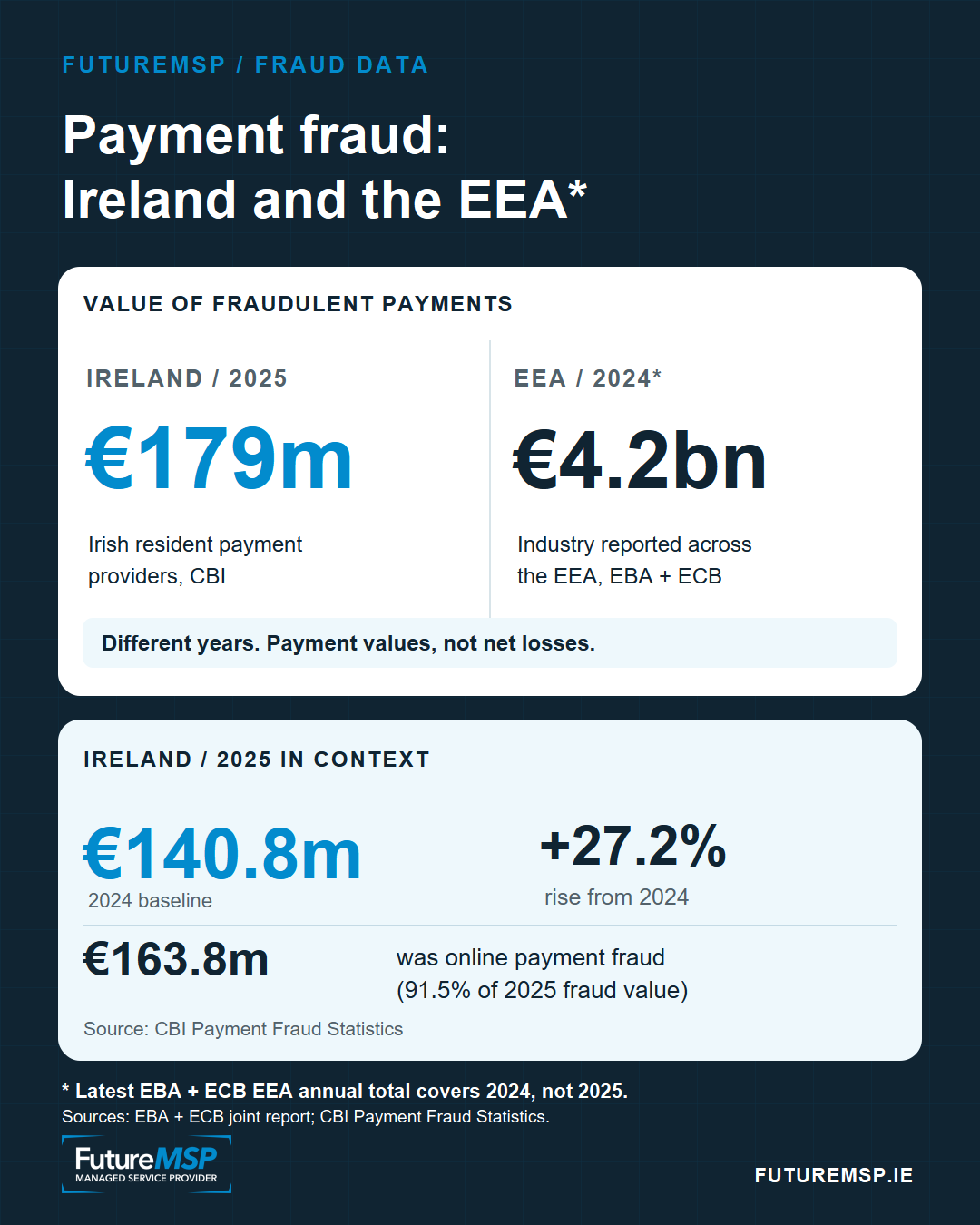
The latest EBA and ECB joint annual EEA report puts the value of fraudulent payments across the EEA at €4.2 billion in 2024. It does not yet give a 2025 EEA total. Ireland's 2024 figure of €140.80 million is the year-matched reference; the €179.04 million above is the following year's Irish figure. Neither series covers every scam outside payment provider records.
Five requests worth slowing down for
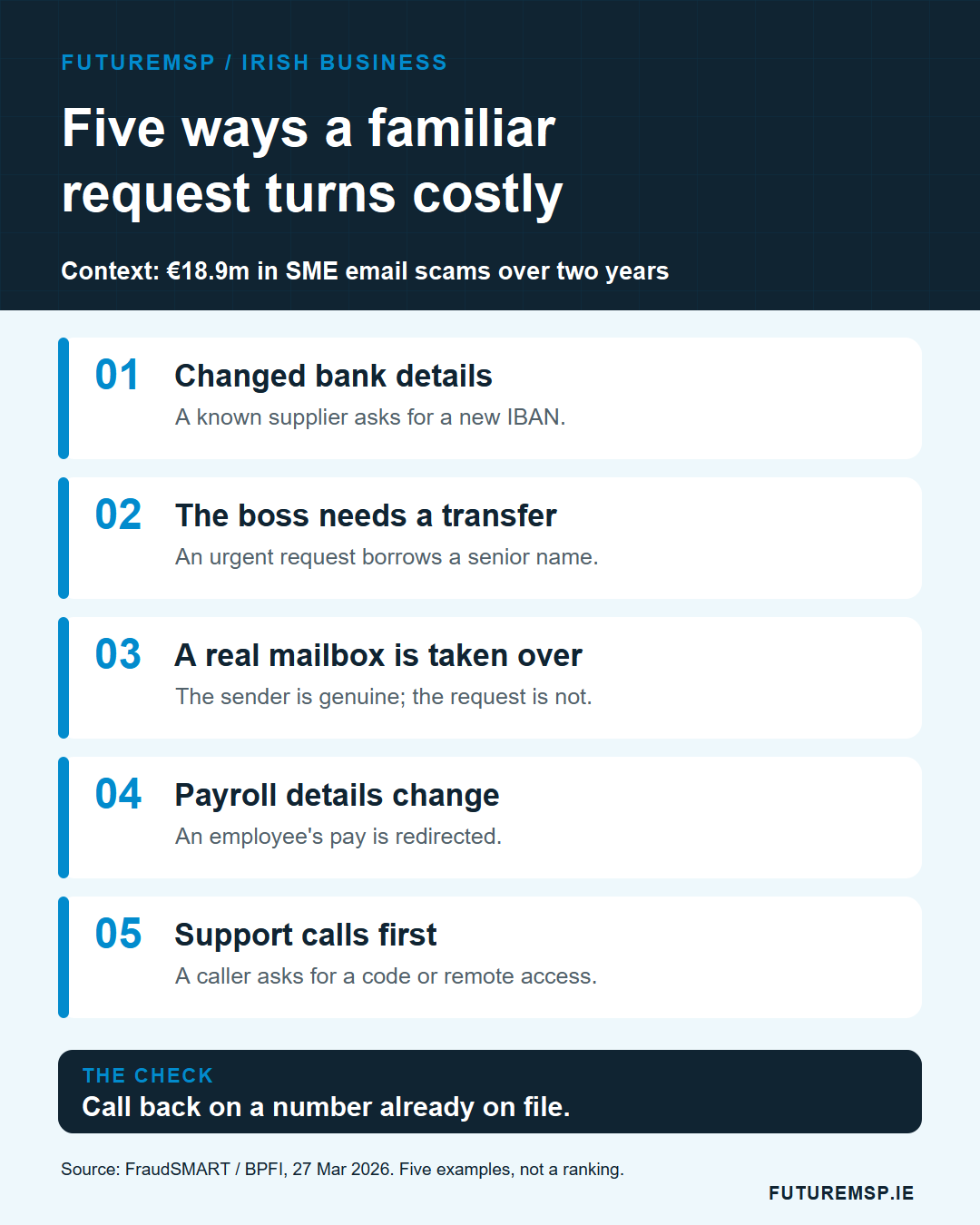
A supplier changes bank details. An email from a known contact says future invoices should go to a new account. The invoice itself may arrive later, when the altered payment details have already been saved. FraudSMART says invoice redirection is the majority of the email-related cases its members see.
A senior colleague asks for an urgent transfer. The name and job title are familiar, and the message may press for speed or discretion. FraudSMART identifies executive impersonation as another business email fraud pattern. An unusual payment still needs the normal approval route.
A real mailbox carries a false request. A compromised supplier or colleague account can send messages that pass a simple sender-address check. Ireland's NCSC guidance also describes lookalike domains and stolen accounts. A reply in the same thread may go straight back to the bad actor.
Payroll details change by email. A request purporting to come from an employee replaces their salary account. FraudSMART has warned about payroll diversion. Verify the change with the employee through an established channel before the payroll file is approved.
A support caller asks for a code or access. A bank or IT support call may sound persuasive and display a plausible caller ID. Treat an unrequested one-time code, login approval or remote access request as a reason to end the call and contact the organisation through a number you already hold. NCSC advice for small businesses recommends separate verification of suspicious contact.
These five examples are not a ranked list, and FraudSMART's €18.9 million figure applies specifically to Irish SME email-related scams over the two years described in its March 2026 release. It is not the total for all five methods or for all online fraud.
Put a pause into the payment process
Keep a verified phone number for each supplier and use it when payment details change. The number in the change request is part of the unverified request. Require a second person to approve new payees and changes to bank details, and give staff permission to pause an urgent instruction, including one apparently sent by a director. These are among FraudSMART's recommended business controls and align with the NCSC's callback advice.
If a transfer has already gone to the wrong account, contact the bank immediately through its known fraud channel and report the incident to your local Garda station. An Garda Síochána advises immediate reporting for invoice redirection and executive fraud because transactions can move quickly. Preserve the email and payment details for the investigation.